Back to Home
Origami crane illustration

The Coursecrane Manifesto

March 19, 2026

"When I was in high school, I searched everywhere for materials on the physics of MRI. Every course I found was aimed at medical students, high-level overviews, nothing deeper.

Years later, I landed at Harvard and finally took a class on how MRIs work. The lecture notes were incredible, but only accessible to those in the class.

I would have done anything to have had those notes be available in high school [1]."

Curated knowledge exists in extraordinary abundance, at universities across the world. The problem is that the best of it stays locked inside canvas exports, private lecture notes, and course videos that expire when semester ends.

Only a small fraction of courses at universities are publicly available. We want to live in a world where anyone can learn higher-level subjects for free, especially advanced and niche courses for which there are no online equivalents.

Professors spend lifetimes writing and distilling research into digestible, teachable chunks.

Access to their life's work ends for students when a login expires. Coursecrane is the infrastructure for bridging the gap between lifetime learners and the heavy gates that must be pushed past to acquire institutional knowledge.
Institutional freedom should not be a prerequisite for deep learning.

The point is not to replace modern learning platforms. It is to lower the global barrier to publishing online and raise the collective ceiling of online learning.
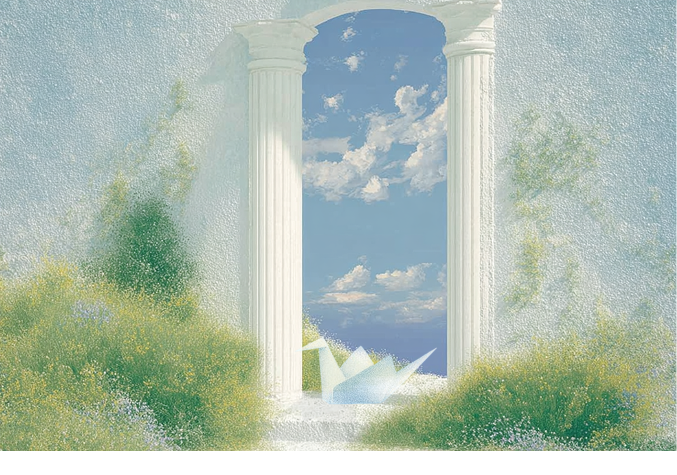
Open doorway in a painted landscape

Cranetexts began as Coursetexts; a free, open library of Harvard lecture notes.

By crowdsourcing their lecture notes, a group of 6 friends from Harvard and MIT found a way to help make current knowledge available to all curious people on the internet.

White origami crane

Their initial dream continues with us, in 2026.

Our goal is not to replace edX, Canvas or other learning initiatives. Coursetexts should be complementary to them, but to lower the global barrier to publishing online, and thus to raise the collective ceiling of online learning.

The average OpenCourseWare course, while extremely comprehensive, dates back to 2008.

The culture around textbook publishing creates materials that are old and prohibitively expensive.

Digitized courses that can exist online don't, not because professors are unwilling, but because publishing takes too much time.

MIT OpenCourseWare runs on roughly $2.7M per year to maintain 2,300+ courses, about $1,170 per course annually.

Our tools aim to lower this cost by converting an existing canvas site to a public page in minutes, licensed under creative commons BY-NC-SA 4.0. Professors keep control by reviewing, approving, and retaining credit with a fraction of the projected time commitment.

Open doorway in a painted landscape

Our Principles

  1. 1. Knowledge is a public good, not a gated asset.

    The best teaching shouldn’t be trapped behind logins, paywalls, or brittle interfaces. Graduate-level and “frontier” material is too often passed around as private notes, Canvas exports, and half-forgotten lecture videos. We work to pull these materials into the open internet and keep them usable.

  2. 2. Self-directed doesn’t mean solitary.

    Many of the most curious people are learning outside of the status quo. The communities that shaped the Coursetexts team, (like Socratica, Hacklodge, Interact, didn’t just provide resources. They showed us what was possible. We want Coursetexts to carry a wondrous and encouraging feeling via shared materials, shared questions, and visible traces of other minds.

  3. 3. Universities are partners.

    We respect professors' rights immensely, and work within their constraints. The goal is to give their best work a longer, wider life, with consent, credit, and context.

  4. 4. Learning software should be evergreen

    When education companies optimize for growth and revenue, experience quality usually collapses. Coursetexts is “forever green”: we are fully volunteer run, our north star is better learning, and we will never monetize.

  5. 5. Open by default, careful by principle.

    When we put materials on the internet, we assume they will be scraped, remixed, and fed into models. We will not sell private course data to labs, and we will be honest with professors about the tradeoffs of open-source. When we ask professors for consent to put their course up, they default to the Creative Commons BY-NC-SA 4.0 license (this is the standard one that OCW uses).

  6. 6. Curiosity is an end in itself.

    We are building for people just like ourselves, whose greatest fear is losing their curiosity. Coursetexts aims to help more people, students, dropouts, working engineers, retirees, find it natural to keep seriously and unseriously learning hard things and making multidisciplinary connections for the rest of their lives.

Looking forwards

Origami crane in flight

The Internet and the age of LLMs has made knowledge plentiful. Why hasn't genuine learning followed the Cambrian explosion in information? Our earlier theory of change assumed that advanced material was the bottleneck for driven self-learners. Under that theory of change, we focused on graduate-level STEM material. Our current theory of change is that motivation and navigation are more common bottlenecks for many self-directed learners, not just access to advanced material, per se.

The internet has more content than anyone can consume. What it starves for is legibility. A course outline can be a path through ideas, experiments, and questions. Our job is to make these stubby internet paths navigable: searchable, annotatable, expandable, and remixable.

The internet library is a living repository for humans.

Your brain is your most complex organ, structured with folds that dramatically increase surface area.

Coursecrane increases the nourishing educational surface area of your exposure, with world-class material that should be public.

Thank you for reading with us.

Coursetexts is 100% volunteer-run and nonprofit, by student volunteers from MIT, harvard, waterloo, laurier, and purdue. we're grateful to michael nielsen and the institute for their grant support, and to lawrence lessig and peter suber for their advisorship. if you want to collaborate, we'd love to hear from you.

1.

[1] MIT OpenCourseWare annual operating cost (~$2.7M for 2,300+ courses) from MIT OCW fundraising pages. Cited figure is total operational cost including infrastructure, publishing, and rights clearance staffing, not a per-image clearance rate. Source: ocw.mit.edu/give. The $1,170/course/year figure is a simple division; actual per-course clearance labor varies significantly by discipline (art history >> computer science).

2.

[2] MIT OCW's own FAQ states that course packs containing proprietary content "cannot be provided under our license." Source: mitocw.zendesk.com.

3.

17 U.S.C. § 107 (fair use). Campbell v. Acuff-Rose Music, Inc., 510 U.S. 569 (1994), the decision that established transformativeness as the primary analytical lens for factor 1 analysis.

4.

Article was written in collaboration with Aileen Luo.